

Skip to content

Excel Functions

Excel f(x)s = Excel Functions

  • Lesson learned: Do not trust Google Sheets function Google Sheets
  • Sort list dynamically (functions) COLUMN
  • Custom fiscal year calendar (CFlex) Basic Math
  • Fixed length ID Formulas - combined functions
  • Expenses calendar, FaCal Basic Math
  • New function IFERROR, finally IFERROR
  • VALUE() of LEFT() Formulas - combined functions
  • Scorring, saving multiple outputs in 1 number Basic Math

WorksheetName and WorksheetsNo UDFs

Posted on February 7, 2012 By ANmar No Comments on WorksheetName and WorksheetsNo UDFs

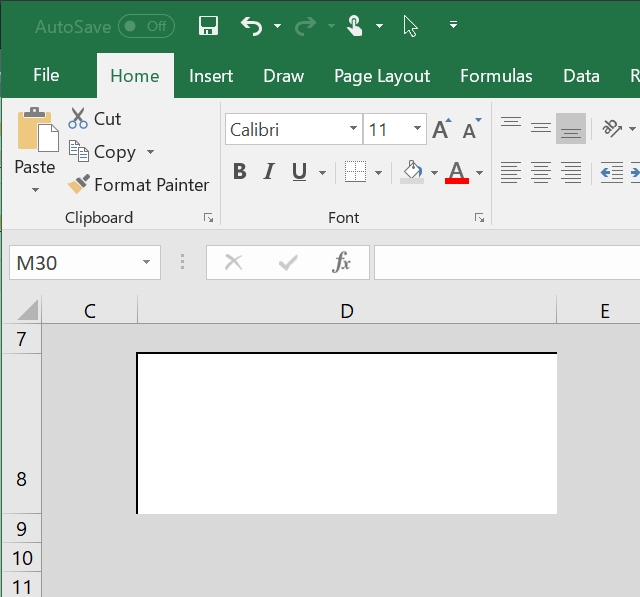
Once you open the sheet and enable macros, you can use function:

=WorksheetsNo()

To get total number of sheets in that workbook

And use function:

=WorksheetName(1)

To get sheet name for first sheet, and

=WorksheetName(2)

To get sheet name for second sheet and so on, I used the function Row()-5 in cell B6 to get the 1 and in cell B7 to get the 2

=WorksheetName(ROW()-5)


Download spreadsheet
 
Lookup and References, ROW, User-Defined f(x)s = UDF, Worksheet

Post navigation

Previous Post: Dynamic selection list
Next Post: Multiple-Validations (connected to each other)

Related Posts

  • MATCH fumction, just a simple search Lookup and References
  • Skills Grid Conditional Formatting
  • Links between two workbooks – dynamically using functions INDIRECT
  • Rotate table using 1 formula ADDRESS
  • VLookup Lookup and References
  • Extract current (Active) workbook name CELL

Leave a Reply Cancel reply

Your email address will not be published. Required fields are marked *

Recent Posts

  • Stale values (Scratched functions)
  • Middle name + 1st name
  • LastSunday, LastSaturday
  • Paste Special Percentage
  • Jan8 date format

Archives

Categories

  • Array formula (1)
  • Formulas – combined functions (58)
  • Google Sheets (2)
  • Non-functions (36)
    • ActiveX controls (2)
    • Conditional Formatting (7)
    • Data Validation (7)
    • Excel User tips (19)
    • Format Cells (6)
    • Graphics (4)
    • Names (3)
  • Standard functions (82)
    • Basic Math (18)
    • Date and Time (16)
      • DATE (9)
      • Hour (1)
      • MONTH (7)
      • NETWORKDAYS (2)
      • TODAY (7)
      • WEEKDAY (8)
      • WEEKNUM (1)
      • YEAR (8)
    • Engineering (1)
      • CONVERT (1)
    • Information (6)
      • CELL (4)
      • ISERROR (1)
      • N (1)
    • Logical (30)
      • AND (5)
      • IF (24)
      • IFERROR (6)
      • IFNA (1)
      • IFS (1)
      • ISERROR (1)
      • OR (2)
    • Lookup and References (36)
      • ADDRESS (4)
      • CHOOSE (3)
      • COLUMN (7)
      • FORMULATEXT (1)
      • HLOOKUP (1)
      • HYPERLINK (2)
      • INDEX (5)
      • INDIRECT (6)
      • MATCH (12)
      • OFFSET (15)
      • ROW (11)
      • VLOOKUP (5)
    • Math and Trig (24)
      • ABS (1)
      • CEILING (1)
      • COUNT (1)
      • COUNTA (4)
      • INT (9)
      • LARGE (2)
      • MAX (1)
      • Min (2)
      • SMALL (3)
      • SUM (3)
      • SUMIF (1)
      • SUMIFS (2)
      • SUMPRODUCT (1)
    • Statistical (5)
      • COUNTIF (4)
      • COUNTIFS (1)
    • Texts and Strings (24)
      • CHAR (5)
      • CONCATINATE (1)
      • FIND (1)
      • LEFT (8)
      • Len (4)
      • MID (9)
      • REPT (3)
      • RIGHT (2)
      • SEARCH (9)
      • STRING (1)
      • SUBSTITUTE (2)
      • TEXT (4)
      • TRIM (2)
      • VALUE (2)
  • Uncategorized (2)
  • User-Defined f(x)s = UDF (3)
    • HyperlinkOf (1)
  • Worksheet (16)
  • XLfxs (2)

Meta

  • Log in
  • Entries feed
  • Comments feed
  • WordPress.org
  • CTRL+Y a mini macro Excel User tips
  • Progress bar in pure functions CHAR
  • Sheet() and Sheets() Lookup and References
  • Cuts string of list of items Formulas - combined functions
  • GoLast to jump to last cell in a column CELL
  • Show developer tab Excel User tips
  • Unix DateTime Number Basic Math
  • VALUE() of LEFT() Formulas - combined functions

Copyright © 2026 Excel Functions.

Powered by PressBook News Dark theme