
Skip to content

Excel Functions

Excel f(x)s = Excel Functions

  • Sort list dynamically (functions) COLUMN
  • Limited Ceiling Basic Math
  • Zipcode-State search Formulas - combined functions
  • Compare2, a tool to compare two sheets using formulas Conditional Formatting
  • 0% interest promotion Basic Math
  • New function IFERROR, finally IFERROR
  • State Abbr with Index+Match+Validation Data Validation
  • Sheet() and Sheets() Lookup and References

Blank (isempty) VS “” (null string)

Posted on February 18, 2020 By ANmar

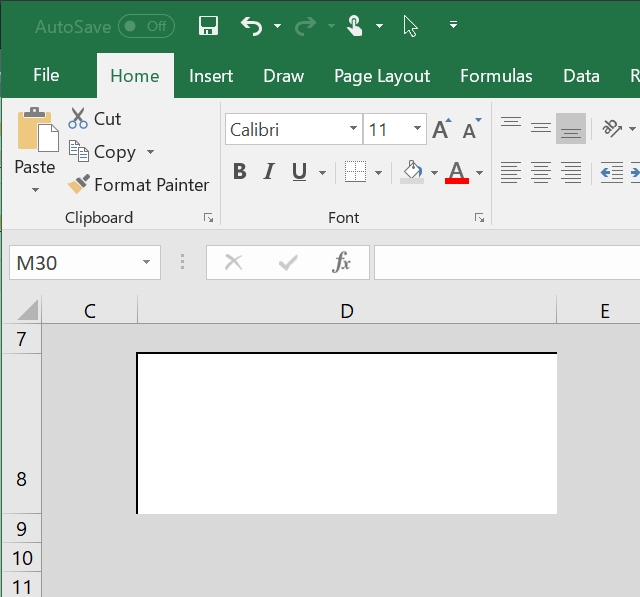
If formula results in “”, then that cell will not be empty.
When copy and paste as values, it will not be empty either.
Versus
When we use VBA (Macro command)

Range.value = Range.value

For that “” cell, it will make destination cell as empty.

Sorting table will consider cells with “” as 0, while empty cells are empty and will not be sorted results in order is different
Excel User tips, Format Cells, Non-functions, Worksheet Tags:blank, empty, null

Post navigation

Previous Post: Excel keeps converting all cells to “Date” (or Time)
Next Post: CHOOSE – tree of decisions

Related Posts

  • WorksheetName and WorksheetsNo UDFs Lookup and References
  • Stale values (Scratched functions) Excel User tips
  • Excel sessions – 2013 VS 2010 Excel User tips
  • Scorring, saving multiple outputs in 1 number Basic Math
  • Excel Limits Excel User tips
  • Skills Grid Conditional Formatting

Recent Posts

  • Calculate above and below me
  • Stale values (Scratched functions)
  • Middle name + 1st name
  • LastSunday, LastSaturday
  • Paste Special Percentage

Archives

Categories

  • Array formula (1)
  • Formulas – combined functions (58)
  • Google Sheets (2)
  • Non-functions (36)
    • ActiveX controls (2)
    • Conditional Formatting (7)
    • Data Validation (7)
    • Excel User tips (19)
    • Format Cells (6)
    • Graphics (4)
    • Names (3)
  • Standard functions (83)
    • Basic Math (18)
    • Date and Time (16)
      • DATE (9)
      • Hour (1)
      • MONTH (7)
      • NETWORKDAYS (2)
      • TODAY (7)
      • WEEKDAY (8)
      • WEEKNUM (1)
      • YEAR (8)
    • Engineering (1)
      • CONVERT (1)
    • Information (6)
      • CELL (4)
      • ISERROR (1)
      • N (1)
    • Logical (31)
      • AND (5)
      • IF (25)
      • IFERROR (7)
      • IFNA (1)
      • IFS (1)
      • ISERROR (1)
      • OR (2)
    • Lookup and References (36)
      • ADDRESS (4)
      • CHOOSE (3)
      • COLUMN (7)
      • FORMULATEXT (1)
      • HLOOKUP (1)
      • HYPERLINK (2)
      • INDEX (5)
      • INDIRECT (6)
      • MATCH (12)
      • OFFSET (15)
      • ROW (11)
      • VLOOKUP (5)
    • Math and Trig (24)
      • ABS (1)
      • CEILING (1)
      • COUNT (1)
      • COUNTA (4)
      • INT (9)
      • LARGE (2)
      • MAX (1)
      • Min (2)
      • SMALL (3)
      • SUM (3)
      • SUMIF (1)
      • SUMIFS (2)
      • SUMPRODUCT (1)
    • Statistical (6)
      • Average (1)
      • COUNTIF (4)
      • COUNTIFS (1)
    • Texts and Strings (24)
      • CHAR (5)
      • CONCATINATE (1)
      • FIND (1)
      • LEFT (8)
      • Len (4)
      • MID (9)
      • REPT (3)
      • RIGHT (2)
      • SEARCH (9)
      • STRING (1)
      • SUBSTITUTE (2)
      • TEXT (4)
      • TRIM (2)
      • VALUE (2)
  • Uncategorized (2)
  • User-Defined f(x)s = UDF (3)
    • HyperlinkOf (1)
  • Worksheet (16)
  • XLfxs (2)

Meta

  • Log in
  • Entries feed
  • Comments feed
  • WordPress.org
  • Worksheet name, dynamically using formula CELL
  • Searching table in 2 dimensions. Formulas - combined functions
  • CountIf limitation COUNTIF
  • Excel keeps converting all cells to “Date” (or Time) Excel User tips
  • WorksheetName and WorksheetsNo UDFs Lookup and References
  • Shapes with dynamic output Excel User tips
  • Repeated Offset Basic Math
  • Standard math to calculate Aspect Ratio Basic Math

Copyright © 2026 Excel Functions.

Powered by PressBook News Dark theme